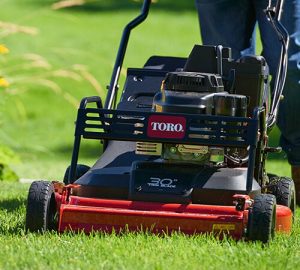
The time is coming when your lawn mower will be tucked up for the winter while it is not needed. Some people may

Firstly the lawn mower should be cleaned of any grass residue. Take special care around the air intake, as dried grass here is a fire hazard, but it is important not to damage any of the mechanical parts. A stiff paintbrush is a good tool for brushing off dried grass. Before you get into the nitty gritty of cleaning, disconnect the spark plug. This will stop the engine from accidentally starting, which you really don’t want when you have your fingers in the guts of a lawn mower. When you clean the underside of the mower take special care to tilt it in the right direction. Check your operators manual for instructions, but generally speaking the mower should always be tilted backwards so that the spark plug points upwards. Tilting a lawnmower on it’s side can result in oil getting into the air filter or exhaust.
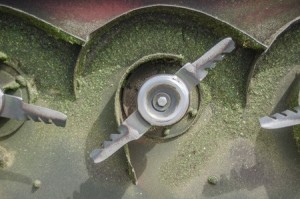
Take the blade off the body of the lawn mower and sharpen it. You can do this yourself, or take it to anywhere that offers blade sharpening services. Make sure the blade has a thin layer of oil on it before it goes back on the mower to prevent rusting. While the blade is off you can safely clean all grass residue from the underside of the lawn mower You can hose the machine down, but take care not to let any powerful water jets near the engine as some parts can be easily damaged this way.
There are two schools of thought when it comes to what to do with the fuel in your mower. Many manufacturers recommend running the engine dry, or siphoning the fuel out. Petrol left to sit will lose it’s combustible properties over time, and can lead to rust and corrosion as well as gumming up the engine. However, the seals and parts inside the fuel tank are designed to be stored in fuel, and not to be left exposed to the air for any length of time, so leaving these parts exposed could make them deteriorate quickly. Additionally, an empty fuel tank is an ideal place for moisture to condense, and water in the engine is something you want to avoid at all costs.

Other engine maintenance tasks that should be done before storing your lawn mower for several months are: changing or cleaning the air filter, replacing the oil, lubricating any moving parts and replacing or re-gapping the spark plug.
Finally, the lawn mower is ready for storage. Make sure that it is kept away from anything combustible or corrosive and that it is stored under a cloth cover. Plastic covers can encourage condensation on the underside, which can drip on your lawn mower and cause rusting. When you come to mow the grass next spring your lawn mower will be in tip-top condition and ready to go.